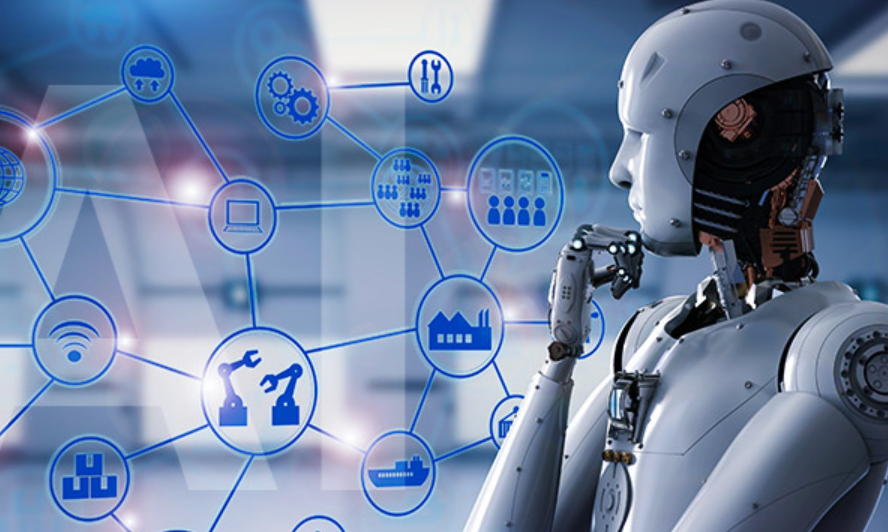
Artificial Intelligence is increasingly embedded in various sectors, driving substantial advancements. In healthcare, AI enhances diagnostic accuracy, while in transportation, it facilitates the development of autonomous systems. Retailers leverage AI for tailored customer engagement, and financial institutions utilize its analytical capabilities for improved risk management. These applications exemplify a broader trend of integrating AI into everyday operations. However, the implications of these innovations raise critical questions about efficiency, ethics, and future developments.
Transforming Healthcare Through AI
As healthcare systems worldwide grapple with increasing patient demands and complex diseases, the integration of artificial intelligence (AI) emerges as a transformative force.
AI diagnostics and predictive analytics enable clinicians to identify conditions earlier and tailor treatments more effectively, optimizing patient outcomes.
This innovative approach not only enhances efficiency but also empowers healthcare professionals, fostering a collaborative environment where technology liberates human potential in patient care.
Revolutionizing Transportation With Intelligent Systems
The integration of artificial intelligence is not limited to healthcare; it is also reshaping the transportation sector through intelligent systems.
Autonomous vehicles utilize advanced algorithms to navigate complex environments, enhancing safety and efficiency.
Furthermore, AI-driven traffic management systems optimize flow and reduce congestion, empowering individuals with greater mobility.
These innovations represent a significant leap toward a more liberated and efficient transportation landscape.
See also: Quantum Computing and Cybersecurity
Enhancing Customer Experience in Retail
A growing number of retailers are leveraging artificial intelligence to transform the customer experience, creating more personalized and efficient shopping interactions.
Through personalized marketing strategies, retailers analyze consumer data to tailor recommendations, enhancing engagement.
Additionally, virtual shopping platforms utilize AI-driven features, enabling immersive experiences that facilitate decision-making.
This innovative approach not only improves customer satisfaction but also fosters brand loyalty in an increasingly competitive market.
Optimizing Financial Services and Investments
While traditional financial services often rely on historical data and manual processes, artificial intelligence is revolutionizing this sector by enabling more data-driven decision-making and enhancing operational efficiency.
AI enhances risk assessment through predictive analytics, allowing firms to identify potential losses.
Additionally, algorithmic trading utilizes advanced algorithms to execute trades at optimal times, maximizing returns while minimizing risks, thus reshaping investment strategies.
Conclusion
As artificial intelligence continues to evolve, its transformative impact across healthcare, transportation, retail, and finance raises critical questions about the future of human-AI collaboration. Will these advancements lead to unprecedented efficiency and innovation, or will they unveil unforeseen challenges that society must confront? The path forward remains uncertain, yet the potential for AI to redefine industries is undeniable. As the next chapter unfolds, the balance between leveraging AI’s capabilities and addressing its implications will be pivotal for sustainable progress.